

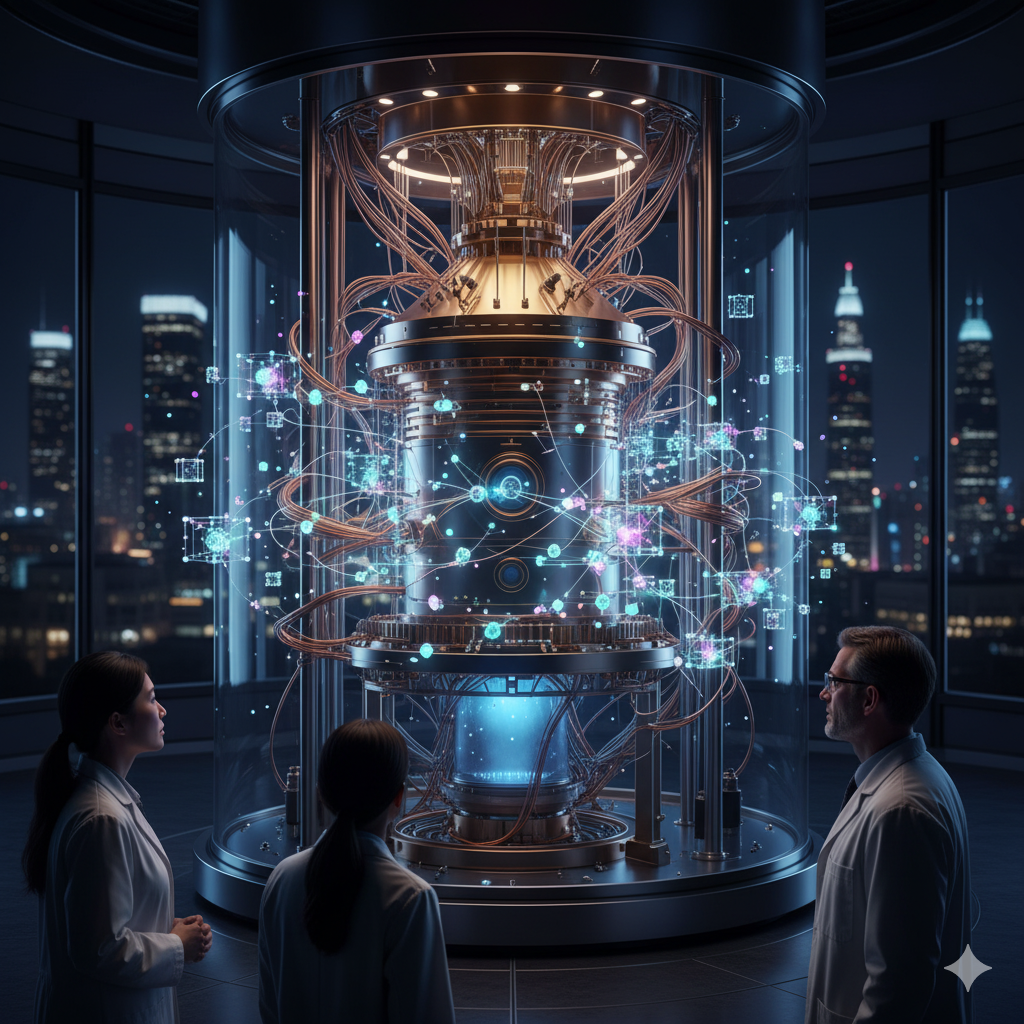
Quantum computing sounds like something straight out of a futuristic movie, full of complex physics and mind-bending concepts. And while it is incredibly complex, its potential impact on our world is so profound that it’s worth understanding why it matters, even if the “how” remains a mystery to most. Unlike classical computers that store information as bits (0s or 1s), quantum computers use “qubits,” which can be 0, 1, or both simultaneously through a phenomenon called superposition. This allows them to process vast amounts of information in parallel, leading to exponential increases in computational power.
What does this mean for us? Imagine a world where we can develop new materials with unheard-of properties, create unbreakable encryption, simulate complex biological processes to cure diseases, or optimize global logistics with unprecedented efficiency. Quantum computing holds the key to unlocking these possibilities and many more we haven’t even conceived of yet.
While still in its early stages, with significant engineering challenges to overcome, the race to build a practical quantum computer is on. Major tech companies and governments are investing heavily, recognizing that the nation or entity that masters quantum computing will hold a significant advantage in almost every scientific and economic field. We might not have a quantum computer on our desks anytime soon, but its eventual arrival promises a “quantum leap” in our ability to solve the world’s most challenging problems.