

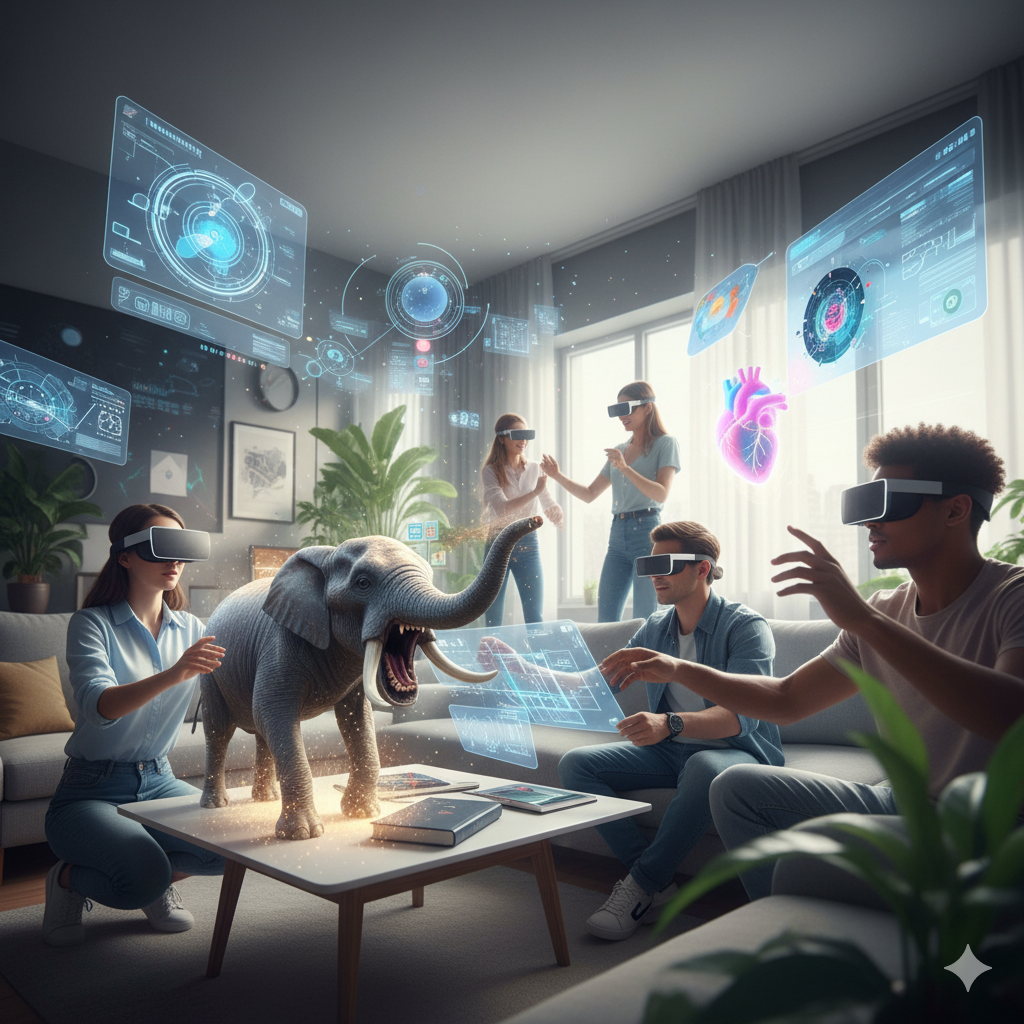
Remember when video calls seemed revolutionary? Today, we’re on the cusp of an even more immersive technological shift with Augmented Reality (AR) and Virtual Reality (VR). These technologies are transforming how we interact with digital content, blending it seamlessly with our physical world (AR) or transporting us entirely to new, digital environments (VR).
Virtual Reality (VR) completely submerges you in a simulated world. Donning a VR headset can take you anywhere – from the depths of the ocean to the surface of Mars, or even into a hyper-realistic game world. Beyond entertainment, VR is finding powerful applications in training (e.g., surgeons practicing complex procedures), education (e.g., historical site visits), and therapy (e.g., treating phobias). The goal is to make the digital experience feel as real as possible.
Augmented Reality (AR), on the other hand, overlays digital information onto your real-world view. Think of popular mobile games where digital creatures appear in your park, or smart glasses that display navigation directions directly in your line of sight. AR enhances your existing reality with helpful or entertaining digital elements. It’s revolutionizing industries like retail (trying on clothes virtually), manufacturing (guiding technicians through repairs), and even construction (visualizing blueprints on a job site).
As these technologies become more sophisticated and accessible, they promise to change everything from how we learn and work to how we socialize and consume media. The future isn’t just about looking at screens; it’s about stepping into and interacting with them in entirely new dimensions.